


Before You Blame the Vaccine: Are We Asking the Right Questions?
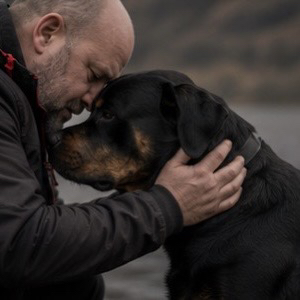
There is something happening in the dog world at the moment that concerns me more than people questioning vaccines.
It's the way social media has turned a complicated subject into a simple one.
Dog has a reaction after a vaccine?
The vaccine did it.
Dog doesn't have the vaccine?
The owner is irresponsible.
Neither position is particularly helpful.
The better question is: what does this individual dog actually need, and what do we know about him before we make that decision?
Vaccination shouldn't be a one-size-fits-all conversation
When I took Odin for his vaccinations, I asked my vet about Lepto-4.
For me, there was a very obvious reason for wanting that conversation.
Odin isn't living in a bubble.
I work with dogs, and that means he can potentially be exposed to dogs from all sorts of backgrounds, including Romanian rescue dogs and dogs imported into the UK by their owners.
That changes the risk assessment.
I'm not saying every dog in Britain automatically needs every available vaccine. I'm saying that the dog's actual life matters.
The Veterinary Medicines Directorate currently recommends that vets and owners agree a vaccination programme based on the individual animal, including local disease risk and the animal's circumstances. It specifically advises vets to consider whether the additional protection provided by four-strain Leptospira vaccines is necessary for an individual dog.
That is very different from saying:
"L4 is for dogs that go abroad."
And then we have the puppy sitting in front of us
Here's something that can easily get lost in the online arguments.
By the time a puppy reaches his new home, he may already have received vaccinations from the breeder.
So when the new owner walks into the veterinary practice, the vet isn't necessarily starting with a blank sheet of paper.
What vaccine was given?
Which product?
When was it administered?
What diseases did it cover?
How many doses has the puppy actually received?
What does the product information say about the next dose?
And, perhaps most importantly:
What is this puppy's life actually going to look like?
Because those answers can influence the vaccination programme that follows.
If an owner decides they don't want a particular component that the puppy has already been receiving, changing course may not simply mean ticking a different box on the next vaccination appointment. Depending on the products and previous schedule, the vet may need to plan additional or different doses to establish appropriate primary protection.
And suddenly we have another problem.
"But I want to take him for walks!"
This is where things become particularly important.
Imagine an owner who knows very little about canine vaccination.
They've bought their first puppy.
They're told that, because of a change in vaccination strategy, the puppy may need a different primary course or additional waiting period.
What do they hear?
"You can't take your puppy out yet."
They don't necessarily understand why.
They don't understand the difference between core and non-core vaccination.
They don't understand maternal antibodies.
They don't understand primary courses.
They don't understand why changing vaccine products can affect the schedule.
They just know that they've been told they might have to keep their puppy at home for longer.
And that is exactly where social media can step in and fill the information gap.
Someone posts:
"LEPTO-4 MADE MY DOG SICK."
Another person replies:
"My vet tried to give my puppy that. I refused it."
Someone else says:
"You don't need Lepto-4 in the UK anyway."
And suddenly a complicated veterinary decision has been reduced to a Facebook comment.
This is where I think vets can do better
I'm not suggesting vets are deliberately getting this wrong.
Far from it.
But I think vaccination appointments should involve better questions.
Not just:
"What vaccinations would you like today?"
But:
Where does this dog live?
Where does he walk?
Does he swim or drink from natural water sources?
Does he hunt or have contact with rodents?
Does he regularly mix with large numbers of dogs?
Does he attend daycare, training classes or boarding kennels?
Does he regularly encounter imported or rescue dogs?
Does he travel abroad?
What vaccinations did he receive from the breeder or rescue organisation?
Which products were used and when?
Has he ever had a reaction to a vaccination?
And perhaps the biggest question of all:
What is this dog's life going to look like over the next few years?
Because that's the dog we're actually trying to protect.
And this cuts both ways
I don't want this article to become another piece of vaccine propaganda.
Vaccines can cause adverse events.
That isn't controversial.
The VMD's latest figures put reported adverse events at approximately 0.040% for L4 vaccines and 0.016% for L2 vaccines. The VMD classifies the overall incidence as rare, and reported events include cases where more than one product was administered or where further investigation suggested another possible cause.
So when someone says:
"My dog had a reaction after his vaccine."
I don't think the correct response is:
"Impossible. Vaccines are safe."
The correct response is:
"Tell me exactly what happened."
What vaccine?
What other treatments were given?
How soon afterwards?
What were the clinical signs?
Has the dog reacted previously?
Was there an underlying illness?
Was there an allergic or hypersensitivity reaction?
And what does the veterinary investigation tell us?
That is how we separate a suspected adverse event from a proven cause.
The Frenchie problem
And this is where the social-media posts I've been seeing become even more frustrating.
If somebody posts a French Bulldog with severe brachycephalic airway problems and says:
"This is what Lepto-4 did to my dog."
I'm going to want considerably more information before accepting that conclusion.
The fact that something happened after vaccination doesn't automatically establish that the vaccine caused it.
Likewise, the fact that a dog has a particular breed doesn't prove that his genetics caused a reaction.
There may be individual susceptibility, breed-associated factors, previous reactions, the number of vaccines given at one appointment, underlying disease, or several factors interacting.
We need the actual history before we start writing the verdict.
The answer isn't "trust the vet" or "don't trust the vet"
It's neither.
It's:
Have the conversation.
A good veterinary vaccination decision should consider the individual dog, his previous vaccination history, his health, his lifestyle, his environment and the diseases he's realistically likely to encounter.
That's exactly why I was comfortable discussing Lepto-4 for Odin.
I wasn't choosing it because somebody on Facebook told me L4 was brilliant.
I wasn't rejecting it because somebody on TikTok told me it was dangerous.
I looked at my dog's circumstances and discussed those circumstances with my vet.
And that's probably the biggest thing missing from the current social-media debate.
People aren't necessarily being given bad information.
They're being given pieces of information without the context required to use them properly.
And when you remove the context from veterinary medicine, you can turn almost anything into a scare story.
Ask better questions.
Know what your dog has already received.
Tell your vet what your dog's life actually looks like.
And before blaming a vaccine for what happened afterwards, make sure you've established that the vaccine was actually the cause.
Because sometimes the answer really is the vaccine.
Sometimes it isn't.
And sometimes, as is so often the case with dogs, it's considerably more complicated than a Facebook post would have you believe.
Thanks for taking the time to read this blog. I really appreciate you spending some of your time reading my experiences and thoughts. If anything I've shared has resonated with you, raised a question, or you'd simply like to get in touch, my inbox is always open. I may not always be able to reply straight away, but I'll get back to you when I can.


Comments