


Punishment: Does It Actually Teach a Dog What to Do?
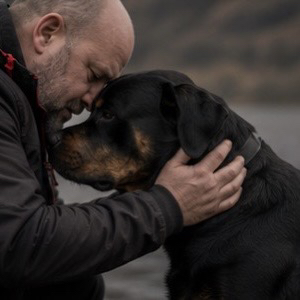
Punishment is one of those words in dog training that can turn a conversation into an argument remarkably quickly.
Some people see it as an essential part of training. Others believe it has no place at all.
But before deciding where we stand, it is worth asking a simpler question:
What are we actually trying to teach the dog?
Does punishment work?
This is where conversations often become unnecessarily binary.
A consequence can influence whether a behaviour happens again. That is an important part of learning, and it is one of the reasons consequences are such a useful thing for dog owners to understand.
But saying that something can change behaviour is not the same as saying it is automatically the best way to teach.
"It works" is not the end of the conversation.
It is the beginning of one.
If a dog stops doing something after a particular consequence, we still have questions to ask.
What behaviour has actually changed?
How quickly did it change?
What else was happening at the time?
What did the dog learn from the experience?
And what happened to the dog's willingness to engage with us during the process?
What are we trying to teach?
Imagine a dog jumping up at the kitchen counter.
We can focus entirely on stopping the jumping.
But stopping one behaviour doesn't necessarily tell the dog what we would prefer them to do instead.
Should they stand on the floor?
Move away from the counter?
Go to a bed?
Wait somewhere else?
The distinction matters.
Good training isn't simply about making unwanted behaviour disappear. It is also about making the behaviour we actually want clear and achievable.
That means we need to look beyond the question of whether a particular consequence can suppress or change a behaviour.
We need to ask what we're building in its place.
The dog is part of the equation
This is where training becomes more interesting.
There isn't one identical learning experience happening every time a consequence is delivered.
Dogs are individuals.
Their motivation can change depending on the situation, their previous experiences, their environment and what else is competing for their attention.
Their physical state and emotional state can matter too.
The same training procedure can therefore look very different from one dog to another.
That's why I think "does it work?" is an incomplete question.
A better question is:
What happens when we use it, with this dog, in this situation, and what are the consequences beyond the behaviour we're trying to change?
"But it works."
Sometimes that's exactly what someone will say.
And they may be right.
A behaviour may have changed.
But successful behaviour change doesn't automatically settle every other question about the training process.
We can acknowledge that something changed while still asking whether there were other ways of achieving the same goal, whether the dog understood what we wanted instead, and how the dog experienced the learning process.
Those aren't anti-training questions.
They're better training questions.
Look at the whole picture
This is one of the ideas we return to repeatedly at Pawsitive Companions:
Behaviour rarely has one neat explanation.
Consequences matter.
So do motivation, context, individual differences, previous experience, physical factors and what is happening around the dog.
The goal isn't to find one magic explanation that applies to every dog.
The goal is to become better at asking useful questions.
Before changing a behaviour, ask:
What exactly is happening?
What might be contributing to it?
What can I realistically change?
What happens when I change it?
And finally:
Is it actually working?
If the answer is no, reassess.
If the answer is partly, keep observing.
And if you aren't sure, that's okay too.
Not knowing yet is a much better starting point than pretending you already know the answer.
The bottom line
Punishment isn't the only question in dog training.
Neither is reinforcement.
The more useful question is what we are trying to achieve, what the dog is actually learning, and whether the way we get there is producing the outcome we want.
Because "it works" is only one piece of the conversation.
The more interesting question is:
What are we teaching while we're doing it?

Comments